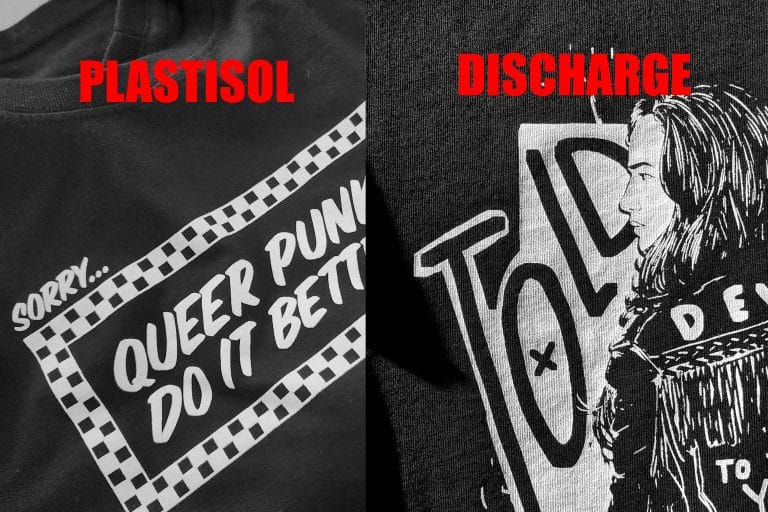
The choice between plastisol and discharge inks is primarily dictated by the desired hand-feel and fabric type. Plastisol ink sits on top of the fabric fibers, creating a durable, opaque, and vibrant layer that can feel slightly rubbery or heavy. In contrast, discharge ink, a specialized type of water-based ink, works by chemically removing the original dye from 100% cotton garments and replacing it with bright white. This results in no hand-feel where the design is integrated into the fabric, maintaining its natural softness and breathability.
While plastisol offers superior colour accuracy (Pantone matching) and works on various synthetic blends, discharge is only guaranteed to work on 100% cotton and can be unpredictable.
- Fabric Compatibility: Plastisol is versatile across cotton, polyester, and blends; discharge is restricted mostly to 100% cotton.
- Texture and Weight: Plastisol creates a thicker, tangible surface; discharge leaves no perceptible residue, making the garment lighter.
- Colour Performance: Plastisol provides high opacity and vibrant “pop” on dark fabrics; discharge often results in a soft, matte, or slightly faded look.
- Durability: Both are highly durable, but plastisol may eventually crack or peel, whereas discharge cannot because it has dyed the fibers.
- Ease of Use: Plastisol is “user-friendly” because it does not cure in the screen; discharge ink is more complex, requiring an activator with a shorter shelf life and specialized curing conditions.
Please reach out with your artwork if you have any questions.